

Civil Society Outcome Statement from Caribbean Convening on a Global Just Transition from Fossil Fuels
Delivered, 02 March 2026, Castries, Saint Lucia.
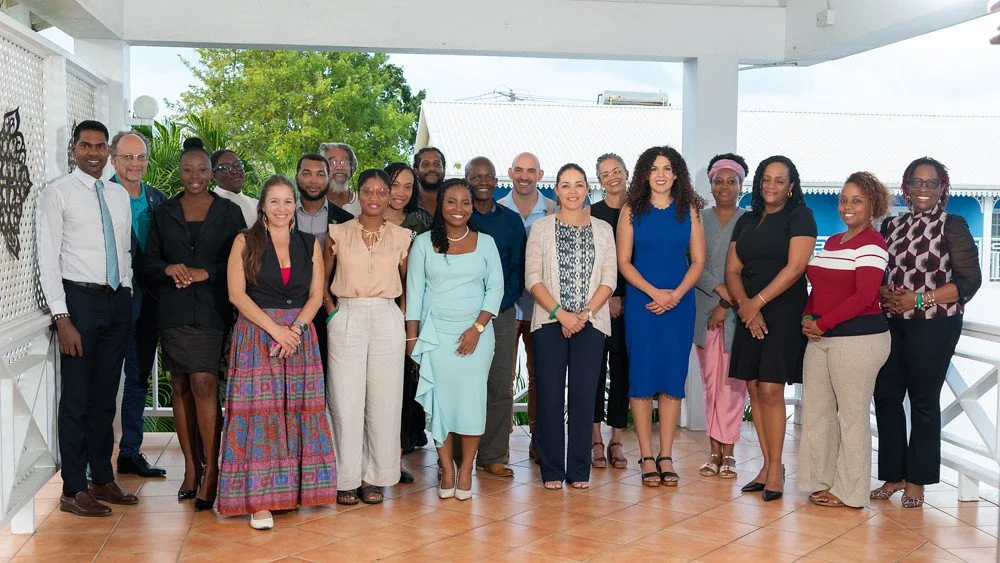
We, as representatives of Caribbean Civil Society, have gathered here today in Saint Lucia to prepare our priorities and demands for a just and equitable energy transition for our region. We call on government officials here present to consider these priorities and concerns during your deliberations tomorrow and carry these forward into the high-level segment of the Santa Marta Conference on the Transition Away from Fossil Fuels in
April 2026. We believe it is crucial for the Caribbean voice to be heard at the table and the parameters of the transition discussed with the needs of our people in mind.
Our region’s dependence on fossil fuels permeates every facet of life on our islands from powering our transport sectors and growing our economies to household electricity. Access and affordability for renewable energy are common denominators for all of us – we need greater public awareness for the move to renewable energy and legislation that supports the transition well enough so that citizens are sufficiently incentivised to make the change.
Infrastructure to support the transition goes hand in hand with education – citizens need to understand the tangible effects the transition will have on their daily lives – reducing the cost of electricity bills, exploring the
establishment of microgrids to ensure community independence from fossil fuels. Workers must be upskilled to support the transition and ensure its success and longevity.
To facilitate this, financial mechanisms are key – we need grants, mechanisms to scale up financing and partnerships with renewable energy producing nations to allow for knowledge and data sharing and
technological support. Further, we call for reform to the international financial architecture to facilitate access to loans and grants fit for the circumstances of small islands.
A Fossil Fuel Treaty could provide accountability mechanisms, reform the decision-making system from consensus-based to one that is truly inclusive with non-state actors, indigenous peoples, and experts at the
table; and provide a binding agreement and timeline for the phase-out of fossil fuels. A Just Transition Fund could also be established to ensure more people can transition equally across our islands.
As we look toward Santa Marta, we urge governments to produce an action-oriented outcome document, that is pursued in other international fora, and we call for the establishment of a month-to-month Monitoring and Evaluation Mechanism to track the implementation. We also hope for other global north producing countries to lead the way and support our region’s transition.
About the Fossil Fuel Treaty InitiativeThe Fossil Fuel Treaty Initiative is spurring international cooperation to end new development of fossil fuels, phase out existing production within the agreed climate limit of 1.5°C and develop plans to support workers, communities and countries dependent on fossil fuels to create secure and healthy livelihoods. For more information on the Fossil Fuel Non-Proliferation Treaty Initiative and proposal, access here.