
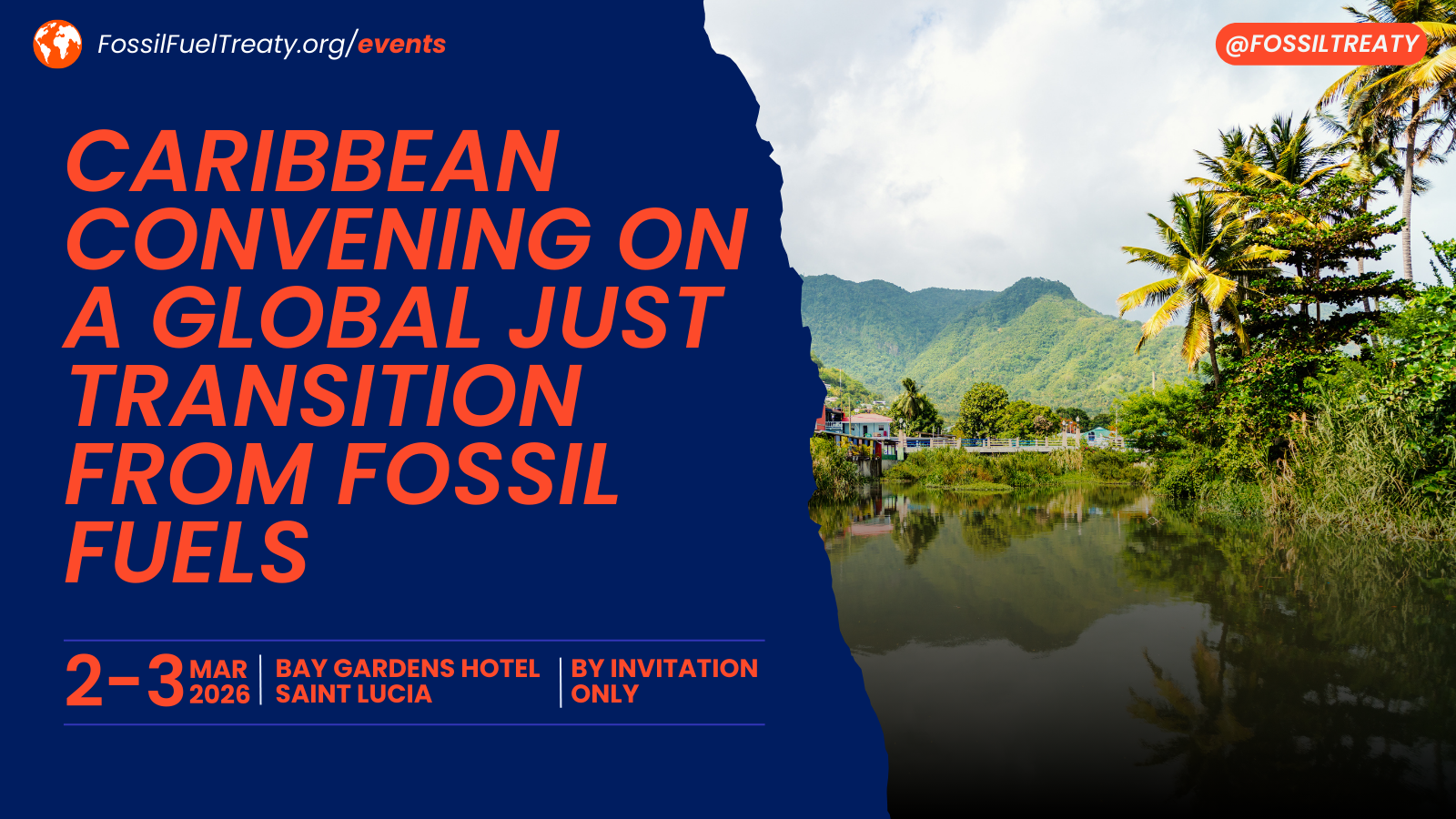
Caribbean Convening on a Global Just Transition from Fossil FuelsSaint Lucia, Bay Gardens Hotel, 2-3 March 2026
By Invitation Only
Climate negotiations continue to be stymied around the biggest cause of the climate crisis - fossil fuels - and what is required for an equitable transition. Although there is global consensus around the need for a transition away from fossil fuels, there remains no concrete global plan on how to mobilize and make the transition happen. Governance, finance and implementation modalities are urgently needed, but at the moment international climate and financing negotiations remain gridlocked.
The world remains dangerously off track to limit warming to 1.5°C. According to the 2025 UNEP Production Gap Report, governments project producing 120% more than the amount of fossil fuels in 2030 consistent with the 1.5°C temperature limit. Caribbean countries have long called on the global community for greater climate ambition and increased financing. The Caribbean played a crucial and leading role in securing the 1.50C temperature limit in the Paris Agreement and several Caribbean countries have gone further to join the bloc of 18 countries participating in discussions on a Fossil Fuel Treaty — to manage an orderly, fair, and science-aligned decline in fossil fuel production.
At COP30 in Belém, Brazil, the Government of Colombia announced that it will host the First International Conference for the Phase-Out of Fossil Fuels in Santa Marta, Colombia (28-29 April 2026). This historic gathering will be co-hosted by: Colombia, the Netherlands and Tuvalu and will open a dedicated diplomatic process exploring pathways, scenarios, governance options, and financial mechanisms required to achieve a global just transition.
-
This major conference aims to begin the conversation towards scoping the needs, challenges and building blocks of the transition from fossil fuels. It aims to bring together a group of high ambition first mover countries, outside the confines of the UNFCCC space, who are aligned on moving beyond dialogue and taking action for a fast, fair and financed fossil fuel phaseout.
The decision to hold this conference has been borne out of an ongoing diplomatic Initiative led by 18 countries to develop a proposed Fossil Fuel Treaty which seeks to address the urgent gap in international cooperation required to govern and enable a managed transition of the world off of fossil fuels. Learning the lessons of the past, diplomatic conferences have been instrumental in increasing international cooperation and leading to eventual treaty negotiations to address major global threats such as the Mine Ban Treaty (Ottawa Process), the Convention on Cluster Munitions (Oslo Process), and the Treaty on the Prohibition of Nuclear Weapons.
This is a crucial moment in the international climate and energy community. During the first quarter of 2026, several regional meetings will be undertaken to raise awareness of Conference plans and expected outcomes so that governments and civil society can strategize and advocate for national and regional priorities at the Conference. Given the historic leadership of the Caribbean in multilateral climate policies, it is critical that the region is fully prepared.
-
In preparation for the Santa Marta Conference, this two-day Caribbean convening aims to bring together, from the Caribbean region, civil society representatives (day 1) and Senior government Officials (day 2) with responsibility for matters relating to climate change, energy, and finance alongside climate advocates to:
Prepare and coordinate a regional strategy of engagement, ahead of the Conference in Colombia.
Identify and confirm Caribbean priorities and expectations for the Conference.
Build and reinforce political solidarity, cohesion, and shared purpose across the region.
Convene and equip Caribbean governments and civil society with the latest scientific, technical, financial, and legal insights relevant to the diplomatic process.
Brief Caribbean government officials on the latest financial, legal and technical proposals for the Fossil Fuel Treaty mechanism that will be negotiated within the coming year.
The convening will include both prepared presentations and workshop based group work and will conclude on Day 1 with a sharing of views between civil society and governments on the key outcomes of their deliberations and on plans for Day 2 with key areas of convergence on a Caribbean position for the Santa Marta conference.
Participants will include officials from Caribbean Participating Nations and Target Countries of the Fossil Fuel Treaty Initiative, representatives of regional bodies and sustainable development organisations, civil society leaders from Participating Nations and Target Countries, members of the media covering matters relating to climate and, members of academia with expertise in climate, energy transition and climate finance.
-
The provisional agenda for the Caribbean Convening on a Global Just Transition from Fossil Fuels can be viewed here. This is subject to change.